Why Excavators Leak Hydraulic Oil and How to Stop It
Hydraulic oil leaks are one of the most common problems faced by excavator operators in Malaysia. While a small leak may seem minor at first, it often signals deeper issues within the hydraulic system that can lead to reduced performance, costly downtime, and long-term equipment damage.
In many cases, leaks are directly linked to worn or damaged sealing components. Using the right excavator seals in Malaysia and maintaining proper system conditions are essential to preventing recurring issues and ensuring reliable machine performance.
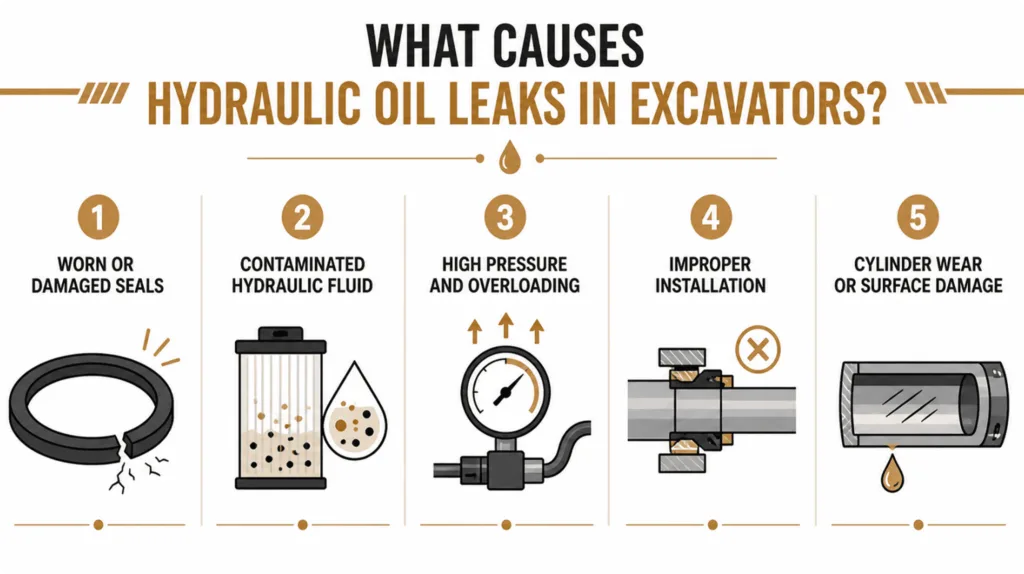
What Causes Hydraulic Oil Leaks in Excavators?
Hydraulic systems operate under high pressure, and even small weaknesses can result in oil leakage. Understanding the root causes helps prevent repeated failures.
1. Worn or Damaged Seals
Over time, hydraulic seals degrade due to friction, pressure, and continuous operation. Once seals lose elasticity or develop cracks, oil can escape from cylinders and joints.
- Loss of elasticity due to wear
- Cracking from continuous pressure
- Reduced sealing performance over time
This is one of the most common reasons operators need to replace excavator seals in Malaysia to restore proper sealing performance.
2. Maintain Clean Hydraulic Fluid
Dirt, dust, and moisture entering the system can damage seals and internal surfaces. Contaminants act as abrasive particles, accelerating wear and causing leaks.
- Dirt and debris causing abrasion
- Moisture leading to corrosion
- Contaminated oil reducing lubrication
Maintaining clean hydraulic fluid is critical to protecting seals and preventing premature failure.
3. High Pressure and Overloading
Operating an excavator beyond its recommended capacity increases stress on hydraulic components. Excessive pressure can deform seals and lead to leakage.
- Excess load increasing system pressure
- Seal deformation under stress
- Accelerated wear of components
Proper load management helps reduce unnecessary strain on the system.
4. Improper Installation
Incorrect seal installation can result in poor sealing, uneven wear, or immediate leakage. Even high-quality seals will fail if not installed correctly.
- Incorrect sizing or fitment
- Damage during installation
- Misalignment of sealing components
Using properly fitted and precision-engineered excavator seals in Malaysia ensures better performance and durability.
5. Cylinder Wear or Surface Damage
Scratches or scoring inside hydraulic cylinders can damage seals and create leak paths. Once the surface is compromised, seals cannot maintain a proper seal.
- Scratched or worn cylinder surfaces
- Uneven contact causing leakage paths
- Reduced sealing effectiveness
In such cases, both the cylinder condition and sealing components must be addressed.
Common Signs of Hydraulic Oil Leaks
Early detection helps prevent major failures. Watch for these warning signs:
- Visible oil around cylinders or hoses
- Reduced lifting or digging power
- Slow or inconsistent movement
- Increased hydraulic oil consumption
- Dirt buildup around leaking areas
Ignoring these signs can lead to more severe damage and higher repair costs.
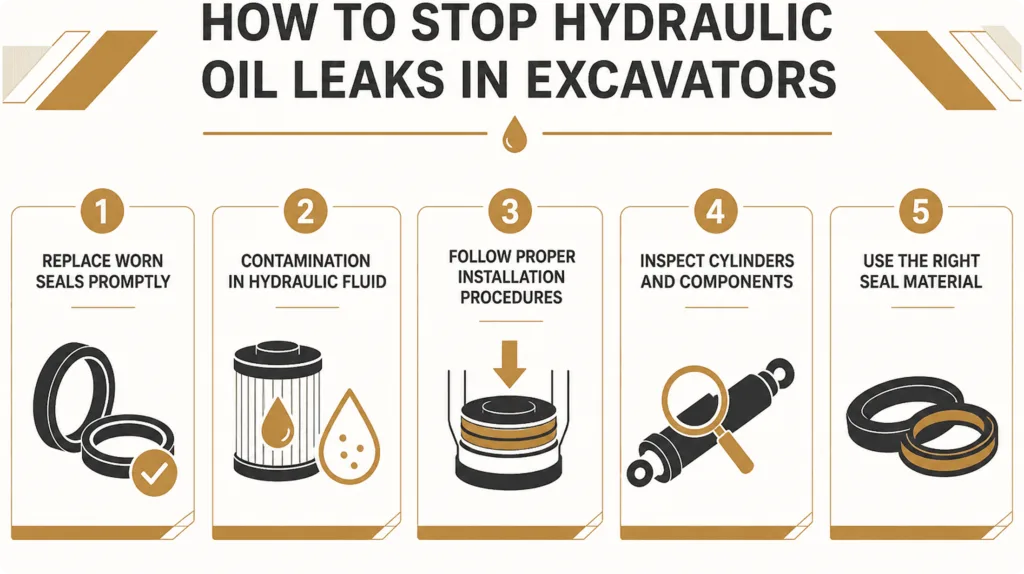
How to Stop Hydraulic Oil Leaks in Excavators
Preventing leaks requires a combination of proper maintenance, correct parts, and good operating practices.
1. Replace Worn Seals Promptly
Do not delay replacing damaged seals. Using high-quality excavator seals in Malaysia ensures better resistance to pressure, wear, and harsh site conditions.
2. Contamination in Hydraulic Fluid
Regularly check and replace hydraulic oil. Use proper filtration systems to prevent contamination from entering the system.
3. Follow Proper Installation Procedures
Ensure seals are installed correctly using the right tools and techniques. Poor installation often leads to immediate or early failure.
4. Inspect Cylinders and Components
Check for scratches, corrosion, or damage inside hydraulic cylinders. Repair or replace damaged components to prevent recurring leaks.
5. Use the Right Seal Material
Different applications require different seal materials. Choosing the correct material improves durability, especially in Malaysia’s humid and demanding environments.